Rethinking Market Opportunity
This is a strategic case study.
A Sunday Bar? A Market Opportunity?
Last Sunday, I wanted to grab a beer with a few friends. The bar we usually go to was closed, along with almost every other bar nearby. Well, it made sense, Sunday probably isn't a profitable night for most bars.
After walking around for a while, we eventually found one that was still open. Interestingly, it was packed.
If most bars decide to close on Sundays, there must be a reason. Yet this one bar seemed to be doing exceptionally well. It wasn't because more people wanted to drink that night. Rather, everyone who still wanted to go out had ended up in the same place. There was still demand, and not a surprise, almost no competition.
That observation stayed with me.
The opportunity wasn't created because the bar was the only one open. It existed because there were still enough people who wanted to drink on a Sunday.
It made me wonder:
“How do we identify a market opportunity?”
“The robot sits at the intersection of Designer Toys and Consumer Robotics. This intersection remains largely untapped, creating a unique market opportunity.”
I wasn't convinced that the evidence in the research report was validating the right assumptions. And this became the starting point for this case study.
That question resurfaced during a recent robot project. As with many agency projects, the strategic direction had already been defined before the design phase began.
As with many agency projects, the strategic direction had already been defined before the design phase began.
The Strategic Claim
The project began with an ambitious vision: a family companion robot whose appearance could be continuously transformed through interchangeable armor, official collaborations, and user-created designs.
Unlike traditional consumer robots, the shell wasn't treated as an accessory. It was positioned as a core part of the product strategy.
The argument was built around three observations:
Designer Toys demonstrated that emotional IP, collectibility, and limited editions could generate long-term engagement and recurring purchases.
Consumer Robotics represented a rapidly growing category, with the opportunity to bring those collectible qualities into an interactive companion.
Consumer 3D Printing made personalization increasingly accessible, allowing users to create and share their own shells through a growing maker community.
Together, these three trends formed the central strategic claim:
“A companion robot that combines collectibility, customization, and creativity represents an untapped market opportunity.”
To support this direction, the research referenced companies such as Pop Mart, Games Workshop and Bandai, alongside communities like Reddit, Etsy and Thingiverse. The underlying argument was that successful ecosystems built around collectibles, accessories and creator communities could be translated into the robot.
However, I have my question:
“Was the evidence actually validating the same strategic claim?”
Every business starts with assumptions
No company has complete certainty before investing in a new product. If they did, innovation would be too easy. Every business starts with assumptions, but the challenge is knowing what those assumptions are, and whether we're validating the right ones.
In this project, the decision to develop a companion robot had already been made. The strategic challenge was no longer whether to build a robot, but what kind of robot should exist, and more importantly, why someone would choose it over every other companion robot on the market.
One common approach to innovation is combining successful ideas from different industries. If two products have each proven successful on their own, perhaps there is an opportunity where they overlap.
That was the starting point of this project.
The research observed the rapid growth of designer toys (especially Labubu), the emergence of consumer robotics, and the increasing accessibility of consumer 3D printing. From there, it formed a central assumption:
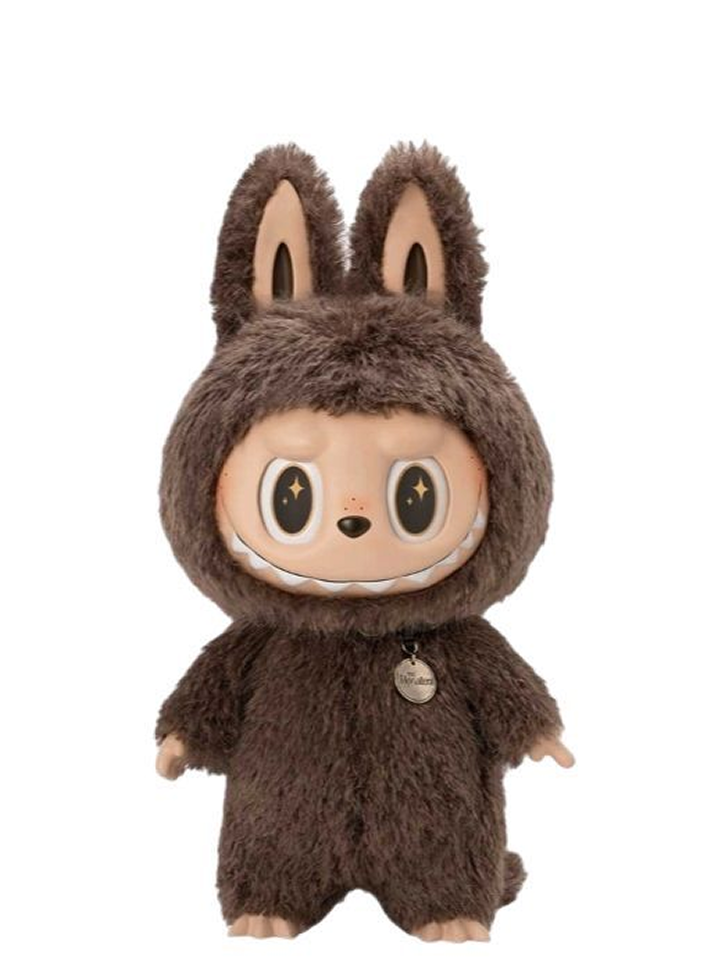
Labubu is popular. And it has interchangeable costumes which can make profit continuously.
Robots are popular.
Therefore a Labubu robot with interchangeable costumes will be even more popular and profitable.
This might sound reasonable, but it's built on a weak assumption: It assumes people love Labubu because of the costumes.
However, for people who buy Labubu, the reason may be:
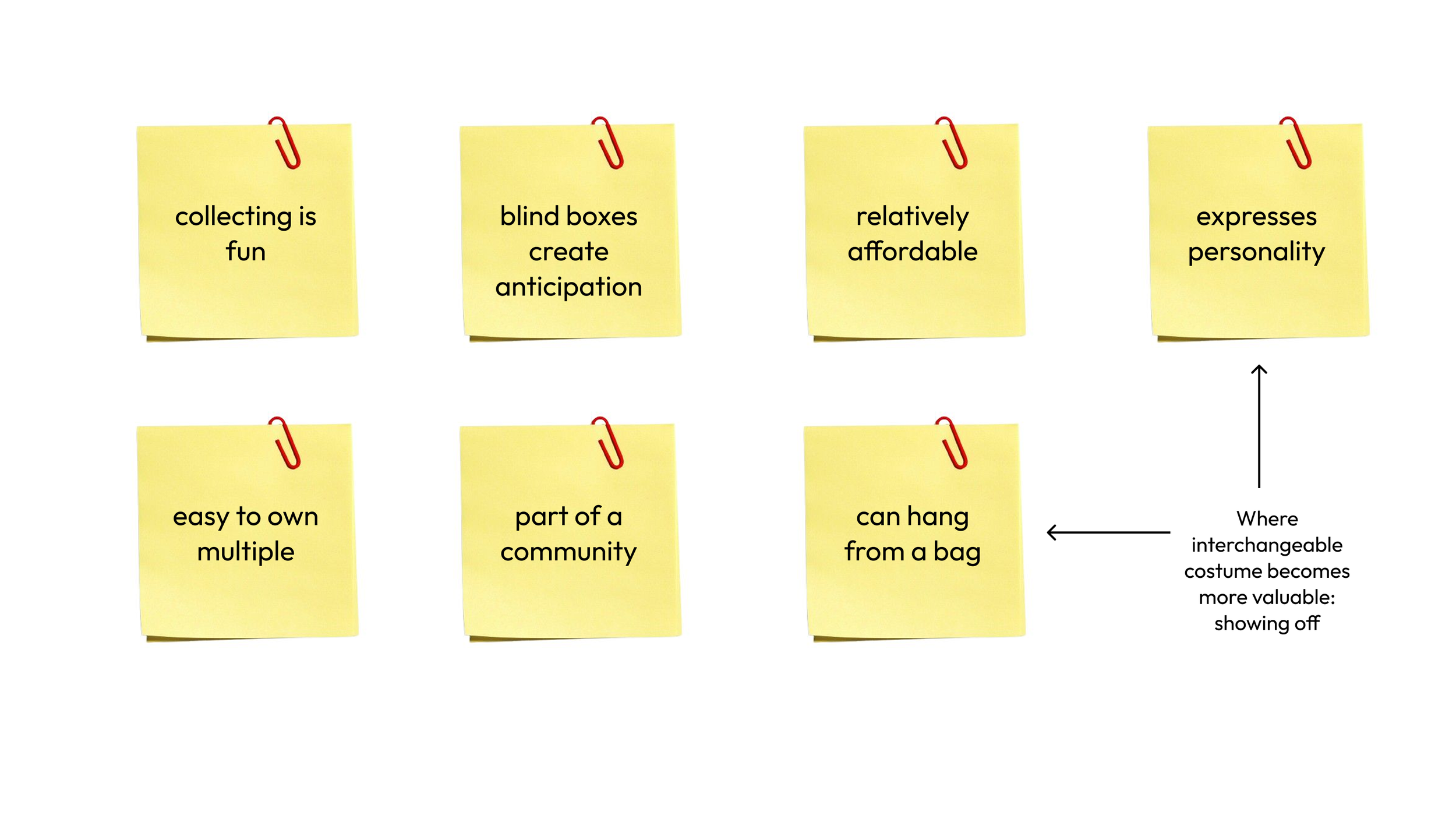
Notice that the costume isn't necessarily the reason. A robot is:
expensive
occupies space
usually bought only once
requires maintenance
has technology inside
The ownership model is completely different. And so for a robot, I would really like to question:
Why do people buy a robot?
What job is the costume doing?
Does changing clothes actually improve anything?
One pattern I often notice in product strategy is the tendency to copy a successful business model without understanding what makes it work.
“People mistake a successful feature for the reason a product became successful.”
Industries Aren't Customers
One of the most common mistakes in early product strategy is treating industries as if they were customers, which I noticed the research also have made. The team sees fast growing industries of: Art toys, companion robots and consumer 3D printing. Therefore draw the conclusion of:
”Interchangeable armor shells + DIY + Designer collabrations” is strongly supported by market data.”
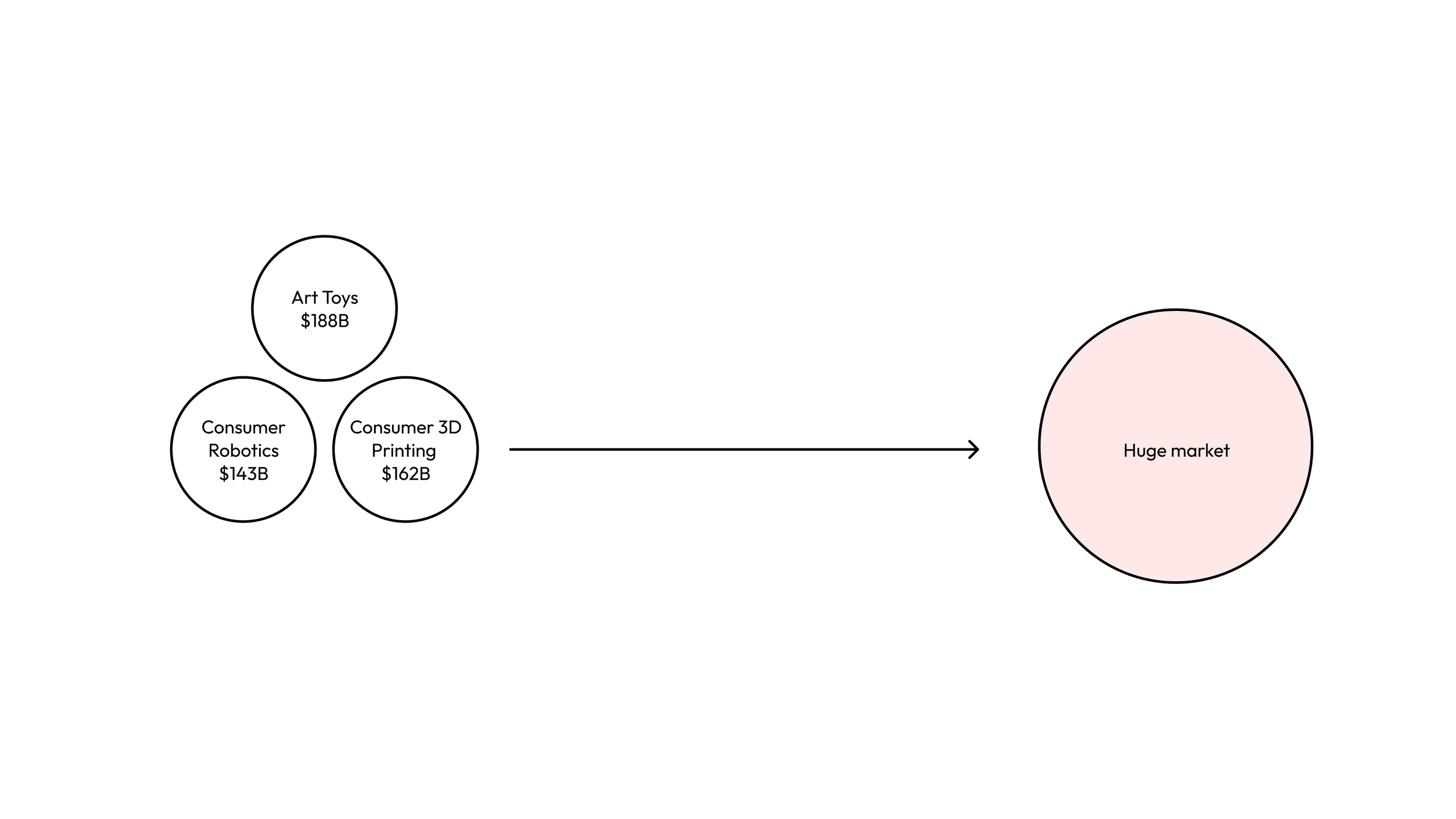
Designer toys are growing. Consumer robotics is growing. Consumer 3D printing is becoming increasingly accessible. On paper, the opportunity seems obvious.
But market growth alone doesn't explain demand for a new product.
Each of these industries attracts people for different reasons. Designer toys are often driven by collecting, self-expression and community. Companion robots are typically purchased for interaction, entertainment or companionship. Consumer 3D printing appeals to people who enjoy making, modifying and experimenting.
So, is the graph above true? or will it actually turn in this way:
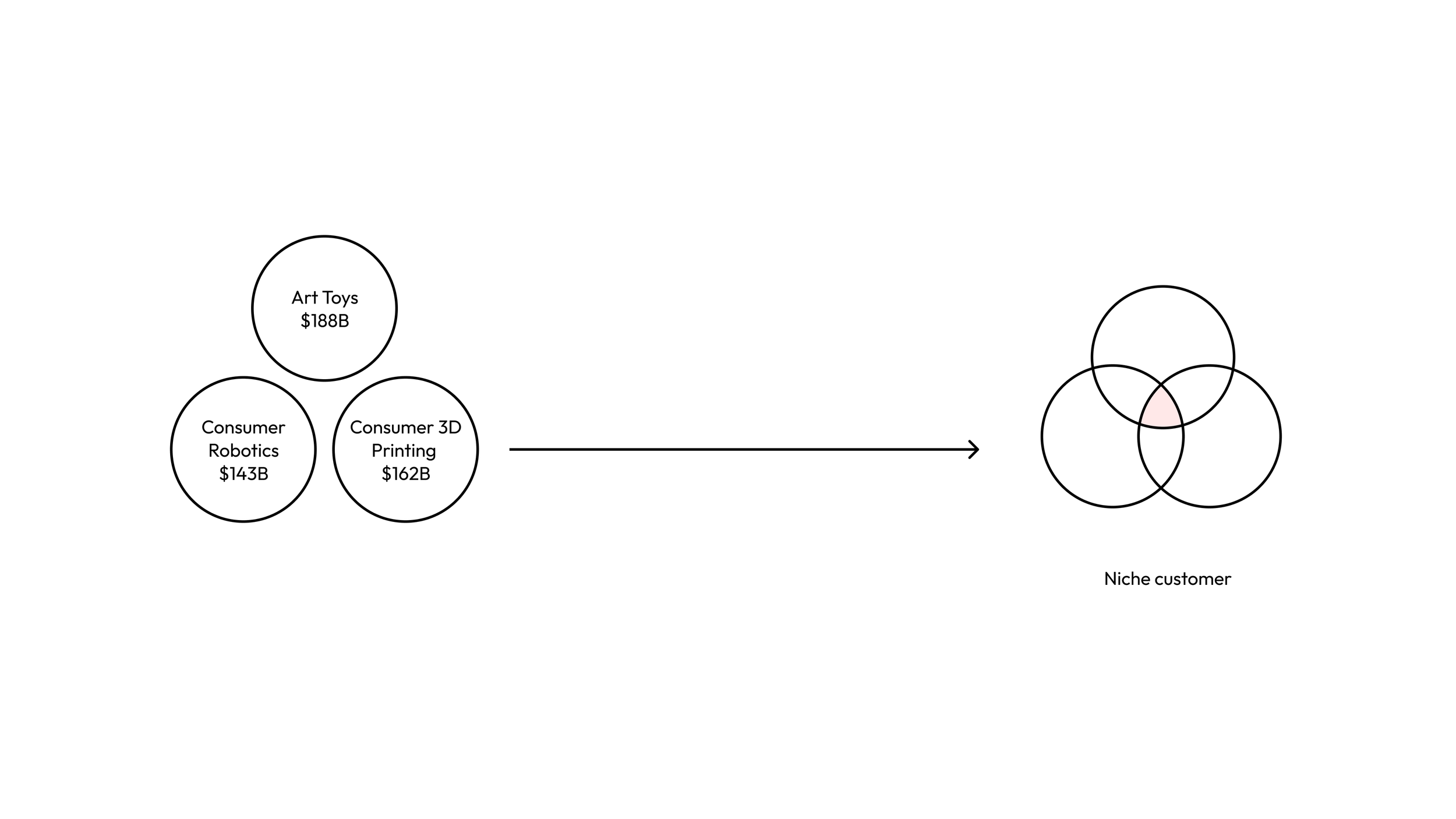
The existence of some overlap does not mean it is large enough to support the product's intended positioning. Imagine another example
Just imagine if I say:
Coffee market: $500B
Luxury watches: $70B
Camping equipment: $60B
Therefore a Luxury camping coffee watches has a huge market. It sounds ridiculous, right?
What Counts As Evidence In Product Design Strategy?
It is easy to criticize a strategy. It is much harder to define what would have convinced me instead.
As I questioned the research, I found myself asking an uncomfortable question:
“What kind of evidence would actually make me believe this opportunity exists?”
The truth is, no research can prove that a product will succeed. Customers are unpredictable, and every new product carries uncertainty. The purpose of strategy isn't to predict the future—it is to reduce uncertainty before making a decision.
From that perspective, I completely understand why the research took the approach it did.
If people are difficult to predict, successful businesses become attractive references. They are tangible examples of ideas that have already worked. This is a common way of reasoning in product strategy, and I've made a similar observation before in my article The Convergent Evolution in Design: successful products often converge toward similar solutions for good reasons.
The question, however, is what they are actually validating.
Let’s break the project down a bit more. The research document validates the idea by finding similar products. However, I think product validation should begin with similar behaviours.
For example: If you're designing a companion robot with interchangeable outfits, the closest behaviour might not be Labubu or Gunpla at all. It might be:
How often do people change the watch bands on a smartwatch?
How often do parents buy new clothes for a teddy bear?
How often do owners of companion robots actually personalize them after the first month?
Those questions are directly tied to the behavior the robot depends on. (I must emphasize that this example is based on the assumption that “interchangeable outfit is essential.” Personally, I believe that a companion robot’s ability to provide companionship is more important than its clothing.)
The original approach about validating DIY outfit in the research was:
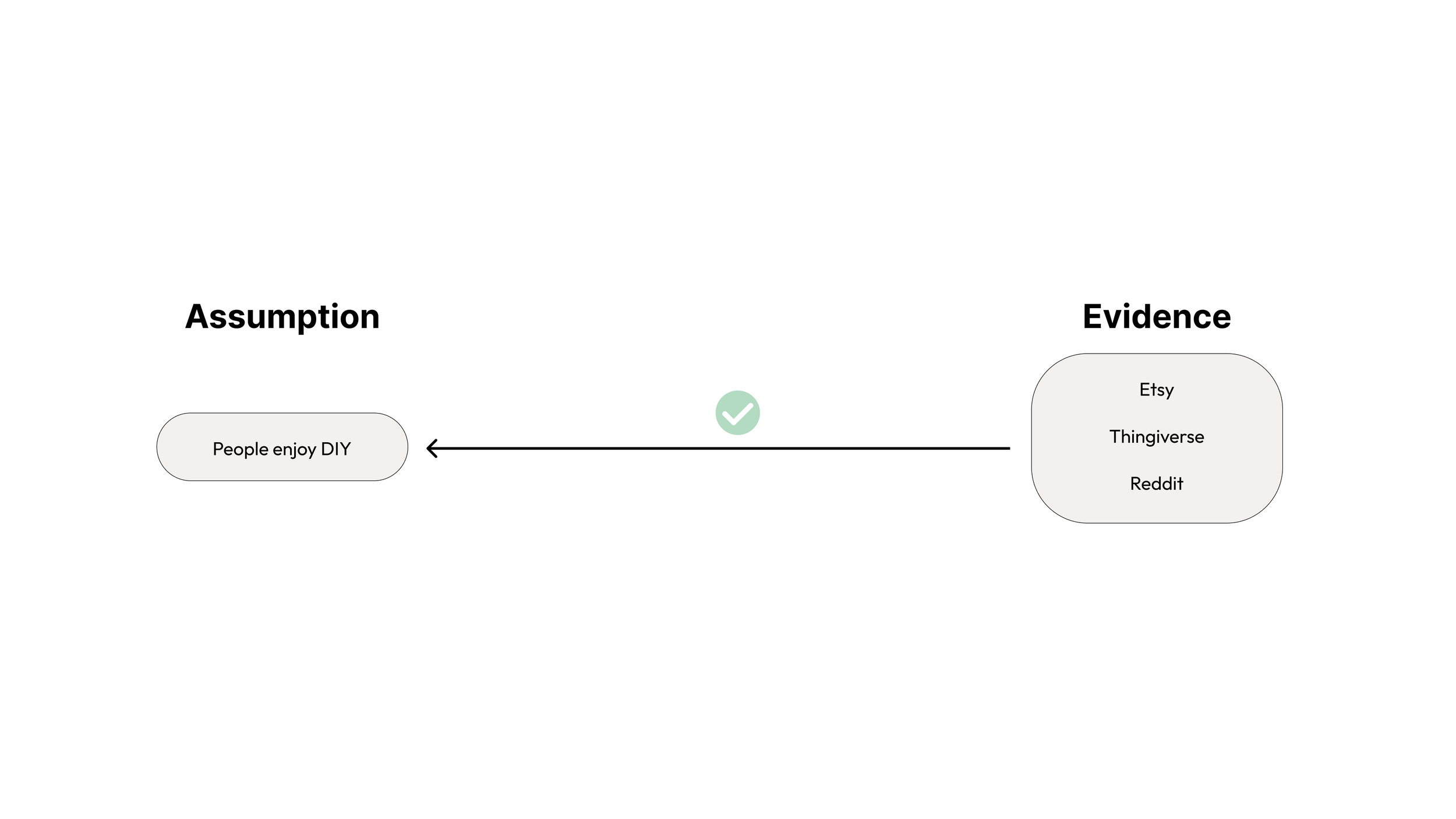
Therefore this will work:
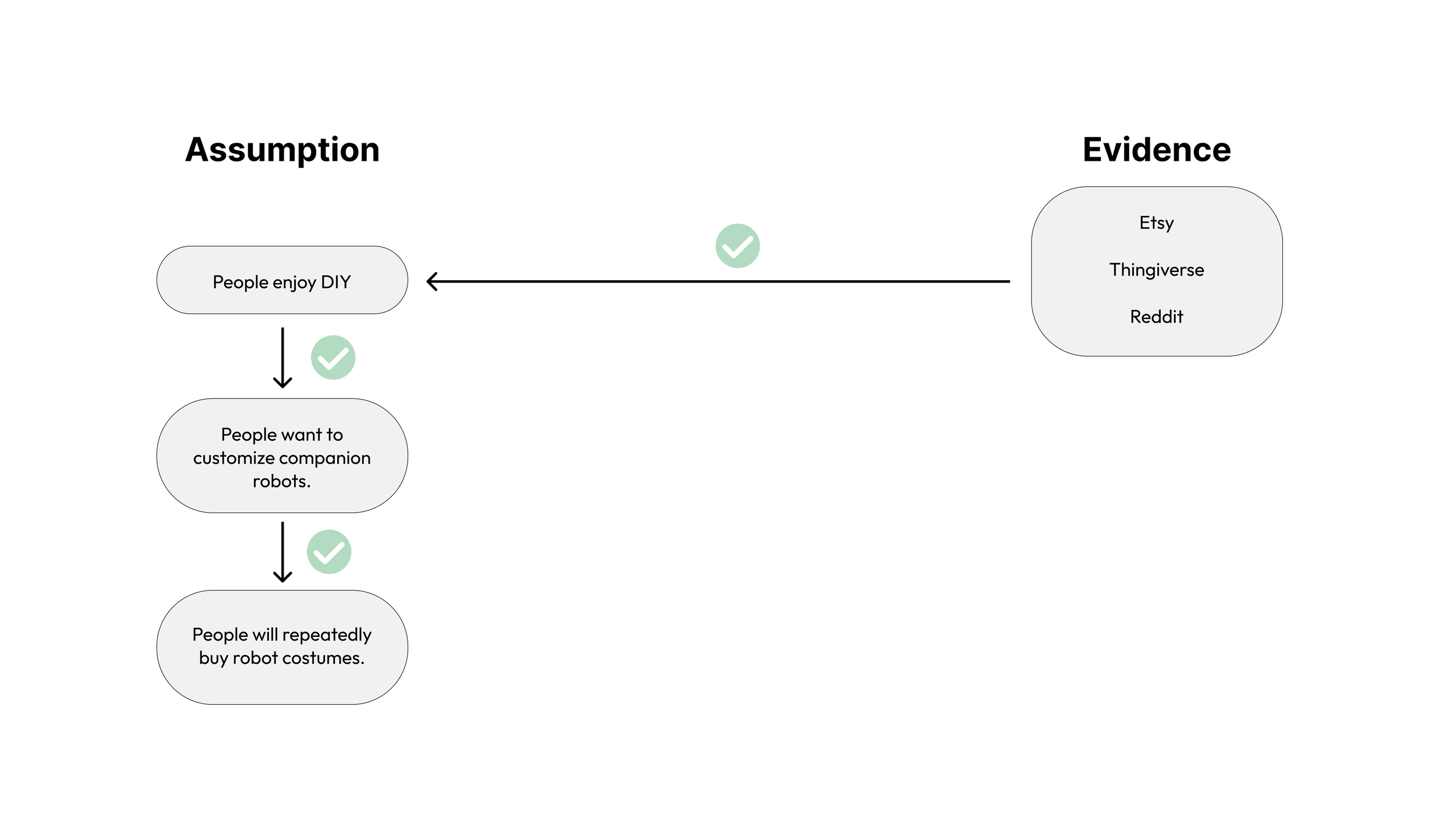
However, DIY in general doesn't automatically validate robot DIY. The given evidence is not validating assumptions about robot costume. In other words, the logic doesn’t make sense.
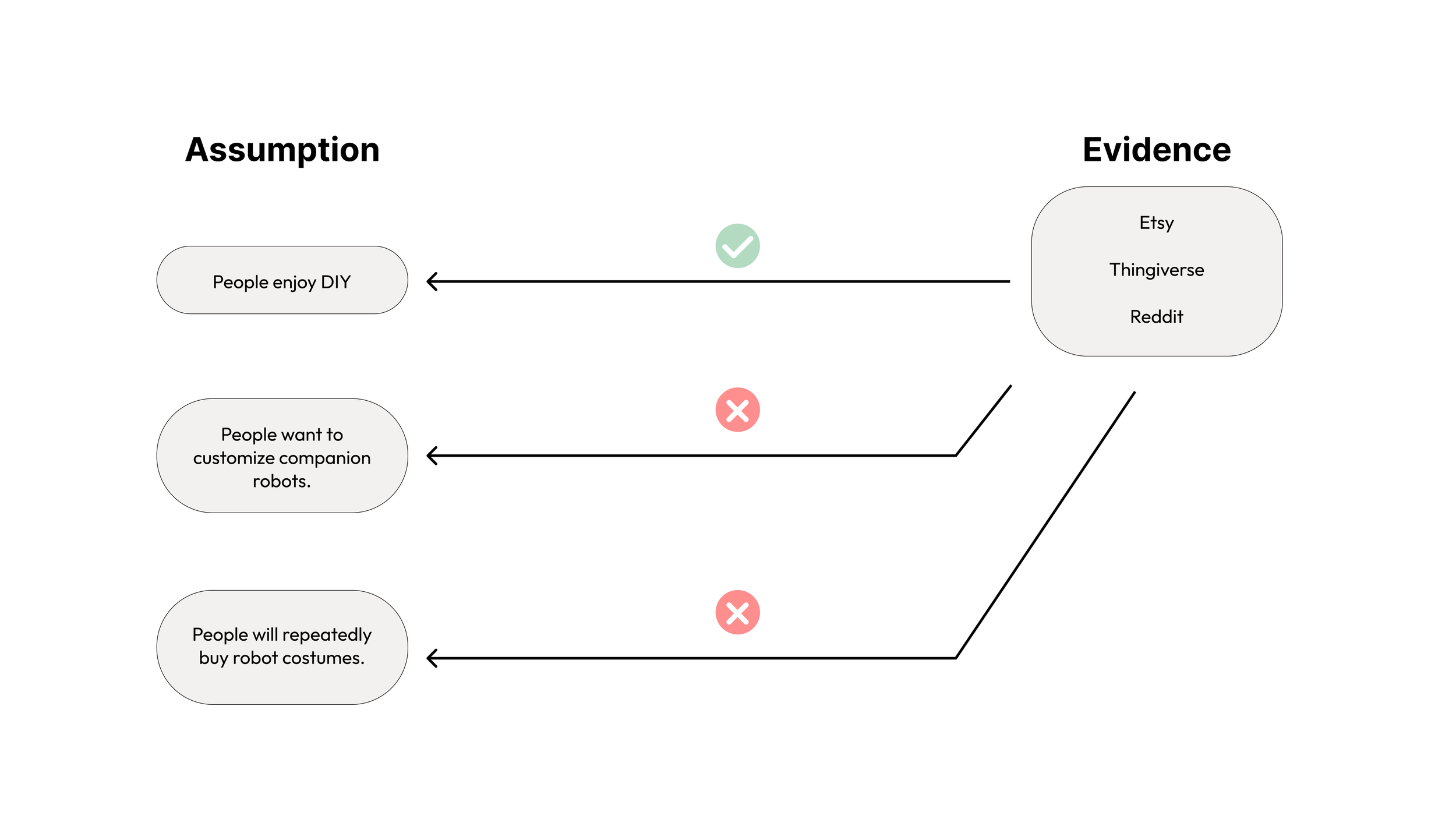
Evidence only becomes meaningful when it matches the assumption being tested. Instead of searching for evidence, why not ask this question:
“What has to be true for this business to succeed?”
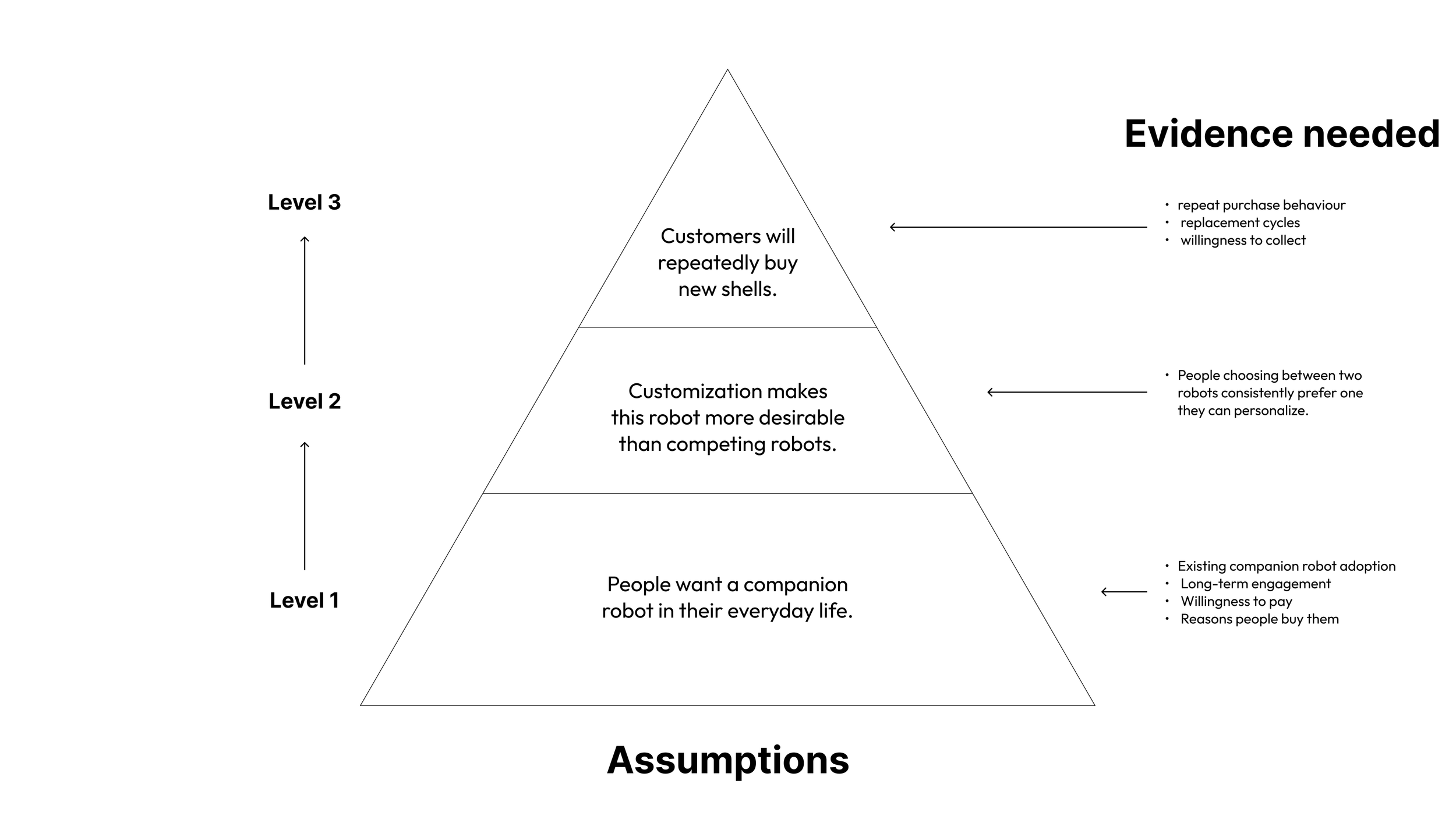
For this strategy of “creating companion robots with interchangeable outfits” to succeed as expected, these three levels of assumptions has to be true.
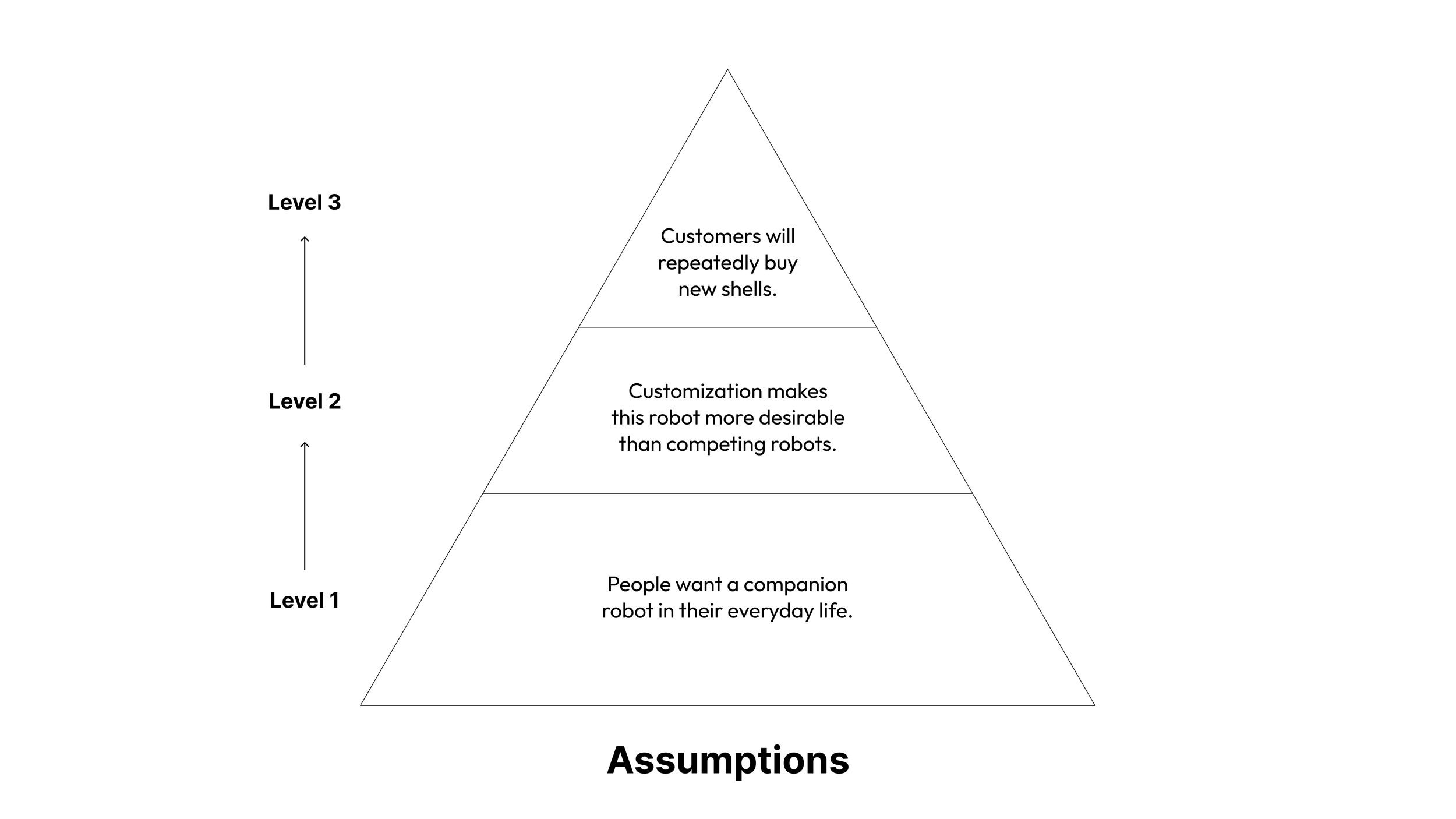
Now let’s look into what evidence do we need for these assumptions:
Now we use this logic to look back to what we have for the research:
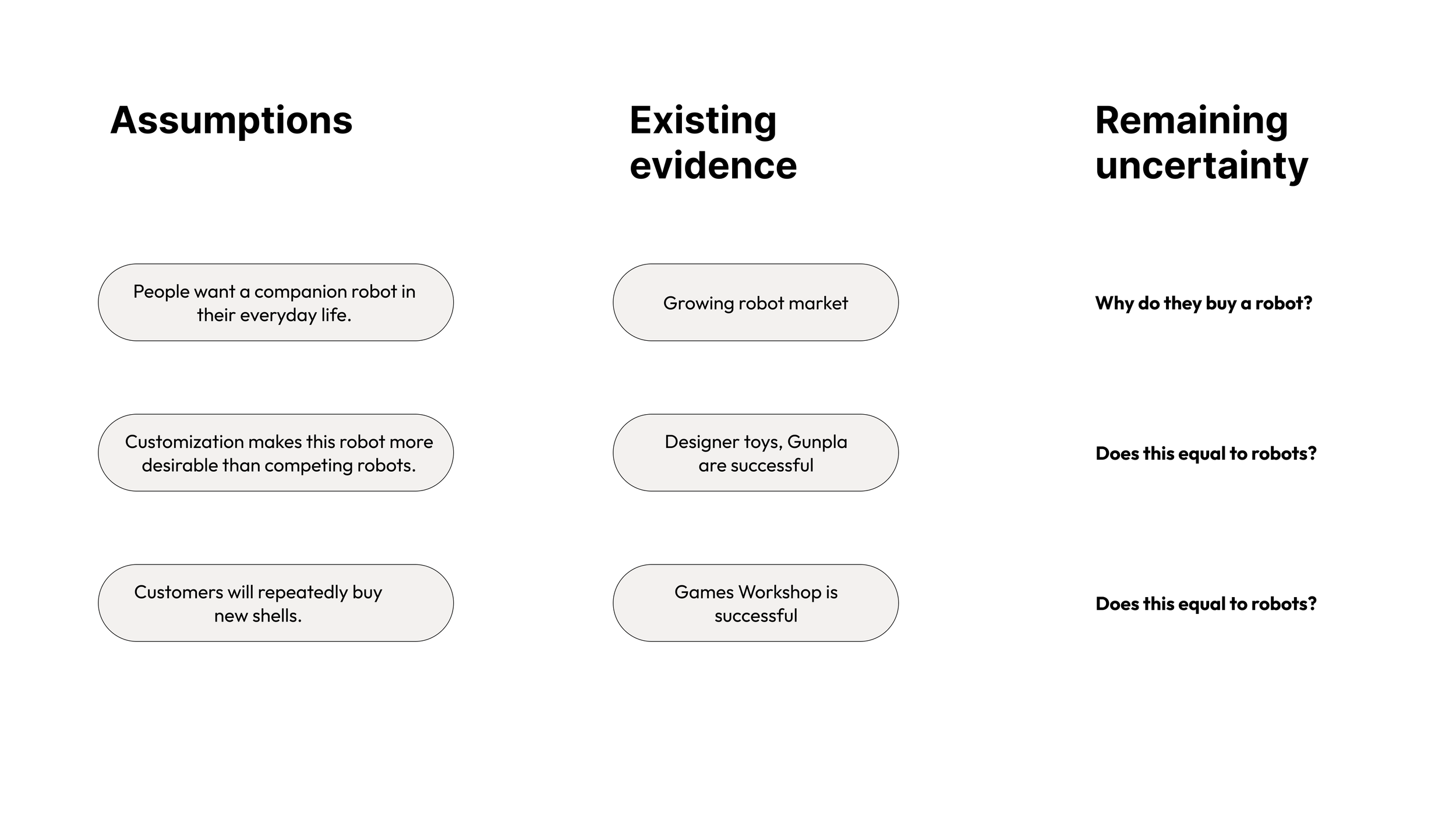
We can now see where the uncertainty remains. While the research demonstrates that similar ecosystems can succeed, it does not yet validate the critical assumptions behind this particular product.
Designing After Convergence
If convergent evolution is a natural outcome of design, then perhaps the question is no longer how to avoid it. BUT:
“What can designers do in a convergent environment?