The Convergent Evolution in Design
This is an interesting observation and analysis :)
What is Convergent Evolution?
In biology, convergent evolution describes a fascinating phenomenon: unrelated species independently evolve similar characteristics because they face similar environmental pressures. Sharks and dolphins, for example, are separated by millions of years of evolution—one is a fish, the other a mammal—yet both developed streamlined bodies, dorsal fins, and powerful tails. They didn't imitate each other. They simply arrived at similar solutions to the same problem.
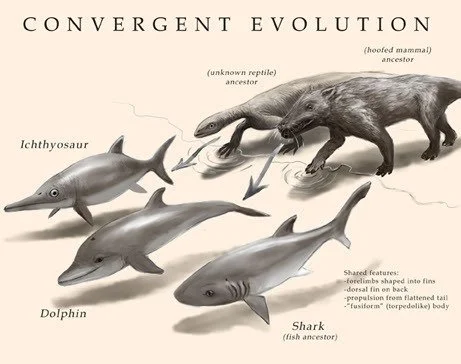
Something similar happens in industrial design as well.
When we look across mature product categories—headphones, computer mice, office chairs, cameras, or electric toothbrushes—we often find products converging toward surprisingly similar forms.
In this article, I will look into the convergent evolution in industrial design field, observe, and try to analysis the reason why. I will conduct my analysis from three perspectives: physical, behavioural, and social.
Natural Selection: Evolution by Constraints
One of the driving forces behind convergent evolution in nature is natural selection.
Take flying animals as an example. Birds, bats and insects all evolved independently, yet they share surprisingly similar characteristics. Lightweight bodies, large lifting surfaces and streamlined forms are not coincidences. Flight imposes a common set of constraints, and over millions of years, evolution gradually filters out solutions that are less effective. Different species may arrive there through different paths, but they often converge toward similar outcomes because they are solving the same problem.
Every design decision must survive a series of constraints: ergonomics, manufacturing, regulations, cost, available technology and, perhaps most importantly, user expectations.
As a product category matures, these constraints become increasingly well understood. Decades of iteration gradually eliminate weak solutions while reinforcing those that consistently perform well. Over time, the design space doesn't disappear, but it begins to converge around a handful of proven architectures. The similarity we observe may not be evidence of imitation, but the natural consequence of many designers independently solving the same problem.
“I believe Industrial Design follows a remarkably similar pattern.”
Physical Selection: Evolution by Habits
Natural selection is not the only force that drives convergence. In design, another form of evolution happens sometimes even faster, which is through experience.
Every designer, every studio, and every agency gradually develops its own design vocabulary. Certain proportions feel "right." Certain transitions become familiar. These decisions are rarely made consciously though.
This is particularly visible in design consultancies. When they work across different industries and clients, consultancies naturally accumulate experience from previous projects. That experience is valuable and it improves efficiency, consistency, and quality. But it also creates preferences. Without realizing it, familiar solutions begin to reappear in unfamiliar contexts.
The result is that products with completely different functions may start sharing similar visual characteristics. Rounded "pill-shaped" forms are one example. Originally, such geometry may have been appropriate for consumer electronics that benefit from an approachable and friendly appearance. Yet sometimes, the same language appears on products where ergonomics, grip, force direction, or precision should be the primary considerations. The form survives not because it is necessarily the optimal response to the problem, but because it has become a familiar response.
Interestingly, this is not unique to agencies. Companies often seek out consultancies precisely because of their previous success. A studio known for creating iconic products attracts new clients hoping to achieve similar results and success. In that sense, a recognizable design language becomes both a strength and a selection pressure. Success reinforces the vocabulary, and the vocabulary becomes increasingly likely to appear in future projects.
“A Over time, a design language can slowly become a design habit.”
Social Selection: Evolution by Evidence
“Every successful product leaves behind more than market share, it leaves behind evidence as well.”
Unlike biological evolution, designers do not start from a blank slate. We have something that nature never had: precedent.
Evidence that a particular form, interaction, or visual language has already been accepted by users. For designers and businesses alike, this evidence reduces uncertainty.
When a product becomes successful, it naturally becomes a reference. It appears in mood boards, case studies, design awards, Pinterest collections, and internal presentations. Gradually, its visual language begins to represent more than a single product. It becomes associated with "good design."
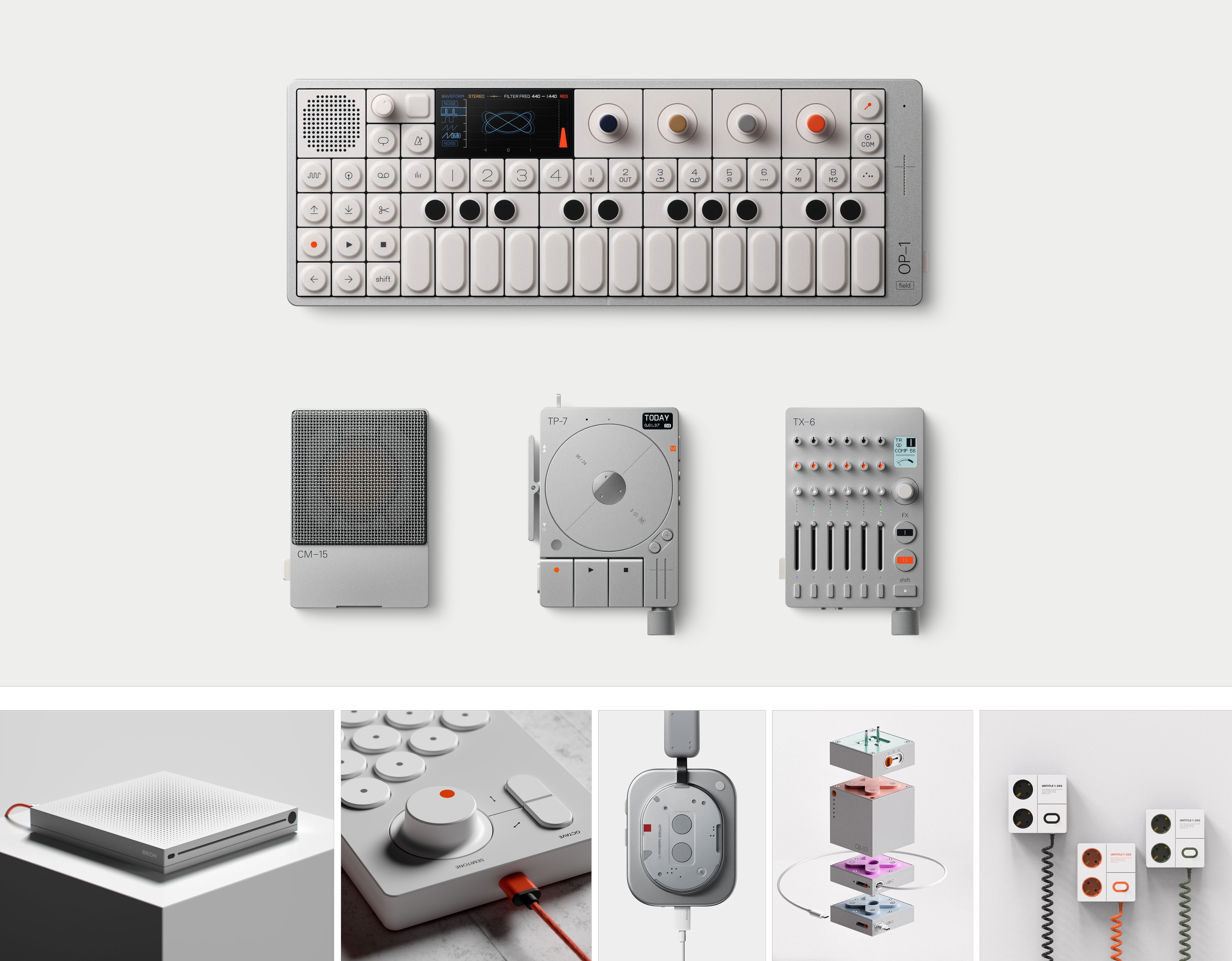
First line: Teenage Engineering Products
Second line: None TE Products
Teenage Engineering is a good example. Their products demonstrated that a playful, minimal, highly geometric aesthetic could become both commercially successful and culturally influential. Not surprisingly, similar visual languages began appearing across consumer electronics. Whether these products were consciously inspired or not is almost beside the point. Once a design proves successful, it inevitably shapes how future designers think about success.
This creates an interesting feedback loop. The more successful a design becomes, the more frequently it is referenced. The more frequently it is referenced, the more likely similar solutions are to emerge. Over time, what began as an innovative design gradually transforms into an industry convention.
Designing After Convergence
If convergent evolution is a natural outcome of design, then perhaps the question is no longer how to avoid it. BUT:
“What can designers do in a convergent environment?