What defines a good product?
This is just a reflective discussion :)
What Sparked My Reflection On This Topic
I always feel a little bit resistant when people talk about industrial/product design as if it is mainly about how things look. Even though I still feel proud when I was told one of my designs was the first post on a very nicely curated design inspiration website.
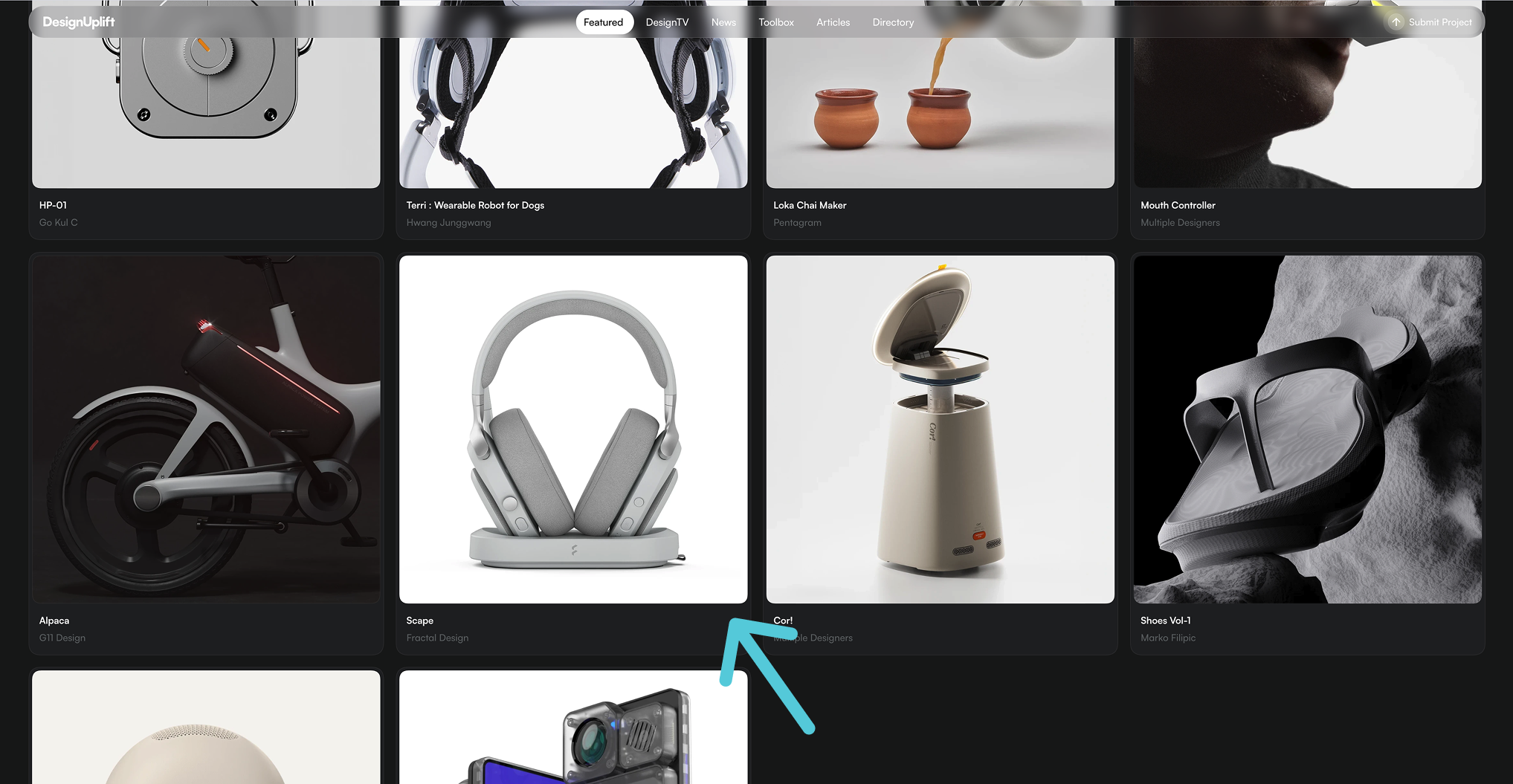
I’ve been reflecting on why that resistance exists on me. In my view, a product is more than its appearance. Aesthetics is part of design, but it does not represent the design. The relationship is suppose to be inclusive: product design includes aesthetics, but aesthetics alone cannot define design.
If appearance is the primary aspect being discussed or evaluated, the underlying work and considerations are often overlooked. That is where my discomfort comes from.
I have once heard:
“…the detail that defines this product.”
Surly I disagree with that. How can a detail define a product? Especially in more complex systems. But that made me wonder, and want to think about defines a product. And what defines a good product.
The Concept of Product is Board
In a broader scale of product in general, the first judgment of a product is how they look, and is always the first thing to be mentioned. But let’s don’t forget:
A beautiful product can be badly designed.
A visually boring product can be extremely well designed.
In straight-forward products like cup, phone case, the appearance actually
drives emotional attraction
signals identity and taste
often is the primary differentiator
In complex products like machines, medical devices, B2B systems appearance more often
communicates trust, precision, safety
reduces cognitive load
supports usability (hierarchy, affordances, clarity)
Appearance becomes instrumental instead of expressive when it’s more functional driven.
Small Improvements = Real Impact
Not all products allow the same type of innovation.
In some industries, especially those that are highly regulated and function-critical, the space for change is narrow, but the impact of that change can be significant. Medical products are a clear example.
These systems are often risk-sensitive and have already been optimized through years of engineering, testing, and real-world use feedback. Every detail exists for a reason. Every interaction carries weight.
Most real-world design impact comes from iteration. A slightly clearer interface can reduce user error. A better arrangement of components can improve workflow. Combining functions can lower cognitive load and make the system easier to understand under pressure.
These are not dramatic changes, but make differences.
This is why I disagreed with my partner when he said his work wasn’t innovative. What he described as “just combining functions and reorganizing things” is, in many cases, exactly where innovation happens.
If he had introduced a completely new function, I would have been surprise. Because true novelty in this space is rare, and often risky.
“Is this meaningfully better within this system?”
That’s the question to ask.
When Novelty Becomes a Trap
During my first job after graduating from my bachelor’s, I often heard a question that stayed with me: “Why can’t you come up with something more disruptive?” As a newcomer to the design industry, this was a source of anxiety.
Because behind that question was an assumption—that innovation must be disruptive, and that disruption must look completely new. Innovation, in this sense, is reduced to a simple idea: doing something that hasn’t been seen before. The belief is that newness, by itself, is enough to justify a design decision.
But as I experienced while designing eyewear, this way of thinking quickly becomes problematic. “I’ve never seen this before” is not a strong argument. Because in mature industries, there is usually a reason why certain things have not been seen before.
In this context, novelty can become a trap.
It creates the illusion of innovation while bypassing the deeper understanding required to design something meaningful. It rewards what is immediately visible, rather than what is actually effective. It creates the illusion of innovation while bypassing the deeper understanding required to design something meaningful. It rewards what is immediately visible, rather than what is actually effective.
“It shifts the focus away from the user and toward designers’ desire to be seen.”
We look to platforms like Instagram, Behance, and Pinterest for inspiration. Over time, this can reinforce a simple equation: eye-catching equals good. Design agencies strive to create the next big hit product. Design awards often push this even further. When a product is reduced to a single poster or image, it becomes easy to predict what will stand out.
Designers see this. They learn from it. And gradually, this becomes their understanding of what design should be. Meanwhile, the system behind the product, the logic behind decisions, and the problems that truly matter are often overlooked.
So after realizing this, where does this leave us? Perhaps the answer is simpler—and more demanding—than we expect.
Instead of asking, “Is this new enough?”, we might ask:
“Does this make things work better?”
“Does this reduce complexity or confusion?”
“Does this respond honestly to the constrains of the system and not making things up?”